Learning Objectives

LEARNING OBJECTIVES:

1. To discover the relationship between cultural influences and the architectural development in South Vietnam

2. To have a deeper understanding of urban planning issues and the interplay of the matrices of determinants involving physical attributes, commercial feasibility, social fabrics as well as political factors in particular relating to Generation Z (Those born between the early 1990s and the early 2000s).

3. To be aware of the impact of rapid urbanization on the environment and the need for sustainable development in the urban planning process.

4. To gain an insight of Singapore’s strengths in urban planning and sustainable environmental management skill-sets

Showing posts with label Day 6. Show all posts

Saturday, June 4, 2011

Day 6 Reflections - Carisa Chan

On the 6th day, we went retail marketing at shopping centres, supermarkets and markets. First, we went to Viacom Center, a shopping mall more on the higher end. Once we entered, we were greeted by the cool air-conditioning and the aisles were very spacious. The goods sold there are branded and much more expensive than those found elsewhere. This shopping mall is more modernized as compared to the markets we see on the streets.

Photo 1: Some shops in Viacom Center

Next we went to An Dong Market, where they sold all kinds of foods, clothes and ornaments. The goods sold here are rather inexpensive and it is acceptable to haggle here. The aisles here were not as spacious as compared to the Viacom Center and it was difficult to get through the aisles from one end to the other. We also saw some people pushing their goods down the stairs to transport it or store it somewhere else.
Photo 2: People pushing their goods down the stairs

Next we went to the Lotte Mart and the CO.OP Mart, and we found departmental stores, fast food restaurants and a huge supermarket inside. The things sold here are more expensive as compared those sold in CO.OP Mart. Also, Lotte Mart is owned by foreigners (Koreans) and CO.OP Mart is owned by the local people. Lotte Mart also has more shops and I felt that the place was more "filled" as compared to CO.OP Mart where there is only a few shops on the second floor and it was rather empty.

Photo 3: Outside of CO.OP Mart

Day 6 Reflections - Pei Shan

Today we went shopping!


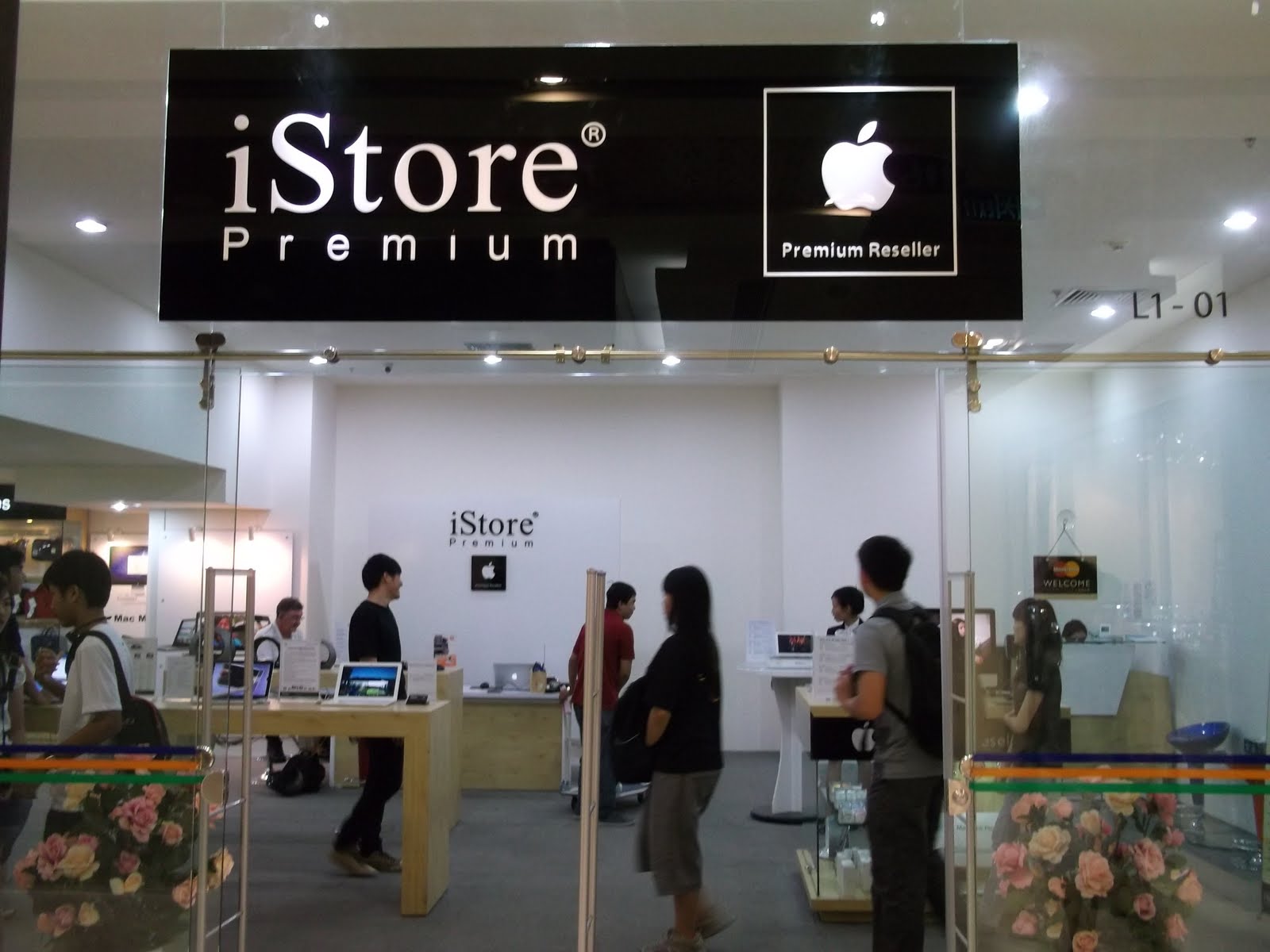
A apple retailer @ Vincom Centre

First we went to Vincom centre. It is a very modern shopping centre, similar to shopping centres in orchard road. Most of the goods there are branded and they are very expensive. They have shops like Converse, apple retailers and many more. It is a shopping mall more for the rich. The structure of the shopping mall is rectangular shaped with the one escalator on one end and the other one on the other end.


Picture of the person transporting the goods by rolling it down the stairs.
@ An Dong Market

Secondly, we went to An Dong market, which is a traditional market. It is similar to our wet markets, just that it does not only sell food, but clothes too! The shops there are very close to each other and its very stuffy. You have to squeeze through the aisle because firstly, it is very narrow, secondly, the stall owners are sitting around on small stools. They also have an interesting method to transport goods from a higher level to a lower level. As the main entrance of the an dong market has many steps, they would roll down the package to get it to the bottom level. The goods are most probably clothes as if they were food, it would be badly damaged.


Thirdly, we went to Lotte Mart. After that, we went to CO.OP mart. The goods in Lotte Mart are more expensive than those in CO.OP mart. They do not sell any fake goods. They had long travelators for customers to move from one level to the other. They used travelators instead of escalators so that customers can bring their trolley along with them. Lotte Mart is a korean mart. We also have one in Singapore. It is similar to our giant megastore.

CO.OP mart is a local mart. The prices of goods here is cheaper than in Lotte Mart and there are also fake goods. Both the supermarkets had this system of locking bags in lockers. This is most probably for security reasons.

Retail marketing in Vietnam and Singapore has a huge difference.
Retail marketing in Singapore is more mordernized than in Vietnam. The most common place to shop for food is supermarkets like NTUC, Giant and Sheng Siong. The most common place to shop for other stuff are shopping malls. The malls are air-conditioned, goods are of better quality, the goods there are of fixed prices and there are no bargaining. In vietnam's markets, most of the things are not of fixed prices and they can be bargained. It is not air-conditioned and they sell a lot of fake goods. Even in local supermarkets, there are fake ones.

The retail marketing in Singapore is well developed. Our most common places to shop at are our shopping malls, which is like those expensive and luxurious shopping malls in vietnam. Whereas in vietnam, the retail marketing is not as well developed.

Wednesday, June 1, 2011

DAY 06-Casandra Ong


Entrance of CO.OP Mart

Outside of CO.OP Mart


After the visit to both supermarkets, Lotte Mart and Co.op Mart, I have made some observations and comparisons. Lotte Mart is a foreign company, owned by Koreans, whereas Co.op Mart is a local supermarket. The differences of the companies range from their products to the building of the supermarkets. The products sold in Lotte Mart cost more than the ones sold in Co.op Mart. I have also observed the choice of escalators and travellators used in each supermarket. In Co.op Mart, escalators are used to travel from one level to another, whereas in Lotte Mart, travellators are used instead. This shows that the locals who buy less would shop at Co.op Mart, hence they do not need travellators for the trolleys. On the other hand, the rich who buy more and need the trolley will shop at Lotte Mart, thus have travellators.

I observed that the advertising methods in Vietnam compared to in Singapore is slightly different. Advertisements are commonly on buildings and huge billboards in Vientam. Most of the advertisements in Vietnam are enlarged to attract the attention of the public. Unlike Singapore, they seldom have advertisements on buses.

The country’s development is dependent on and related to the development of retail markets, which is also one factor of the country’s economy. Hence, vice versa. As the country develops, its population would require more and there will be more demand for products. For example, as the country develops, there would be more families who because wealthier and would want to upgrade to cars instead of motorcycles. This will result in a demand for cars, which increases the the sales of automobiles. Construction of road will be necessary, creating more jobs.

Sunday, May 29, 2011

Day 6 Reflections (27 May 2011) -- Jurvis Tan

Today we set off for retail marts, comparing those of the urbanized and the slightly less developed ones.


This is Viacom Center, it's shops here provide premium, high-class branded goods, it's pretty obvious this shopping mall is catered for the upper-class in Vietnam. Inside the mall, we realized there was a corner for kids to play with lego upstairs, from what i see, it seems that this mall has provided places for these kids to go while their parents go shopping.


After that, we headed to An Dong Market, this is fairly similar to Ben Thanh Market but prices are reasonable there because it's not really tourists-orientated. These market have stalls set up across the whole entire place with narrow, squeezey aisles and many shops eventually selling the same kind of stuff all over the place, totally different compared to Viacom Center.


After visiting An Dong, we went on to visit two hypermarts - Lotte Mart by the Koreans, and COOP Mart by the Vietnamese, both have shown significant difference in organisation of stuff, goods they carry so and so forth. In Lotte Mart, it is seen that all the goods come from various countries and are well categorized just like carrefour in Singapore. However COOP is a local startup and it is something like the Sheng Siong in Singapore, all the prices are lower, and there are brand mock ups, like for example, there's a "Gold Cow" for a "Red Bull" mock up there.


Saturday, May 28, 2011

Day 6 Reflections (May 27) - Tam Wai Hang

Three things I have learnt today:

1) There is a very obvious difference between how the traditional markets and modern markets operate. Traditional markets are like wet markets found in Singapore, but not limited to selling food. The arrangements of the stalls are very tight, so the path in between each stall is very narrow. The shopkeepers also have more freedom and are more carefree when interacting with other people. Furthermore, tourists in traditional markets are able to bargain a cheaper price of an item they wish to buy, and this is very different from any modern markets. On the other hand, Modern markets have a neater arrangement and the technical aspect is also better. Most of the stalls are air conditioned and also equipped with high end technology such as computers as well as electronic directories located around the mall.

2) I have also learnt that Vietnamese people would rather purchase healthcare products from other countries such as USA even though the price is cheaper locally. This is because they think that the products being made locally does not make use of fresh ingredients and may contain other chemicals, so they choose to buy it from other countries.

3) Thirdly, I have realised that Vietnam specialises in producing traditional exports such as dried or crispy mango strips, gum, coffee as well as lotus seeds. Even though these products are sold cheaply in Vietnam due to being produced locally, many of the retailers may sell fake version of these products. However, even if the modern market sells genuine products, the variety available is very limited and can not be compared to those sold in traditional markets.

1) A stall found in a shopping mall, Vincom Centre that sells teddy bears as well as shirts bearing the Vietnam name and star.


A old shopkeeper in a traditional market named An Dong who sells traditional products found in Vietnam such as lotus seeds, dried mangos as well as other herbs and food.
A modern market located in Vietnam called Vincom Centre which sells high quality products such as converse, gucci, as well as apple retailers.

Day 6 Reflection — Grace, Guang Jun, Kimberly and Lincoln


Q1 ) How is the retail development in HCMC a reflection of the country’s development?

The retail development in HCMC gives tourists and locals the impression of Vietnam’s development, whether good or bad. This is due to the fact that if the country is developed, the retail development would be very advanced and would be similar to retail development in already developed countries, so it would reflect that the country is developed even if the tourists or locals are not sure if the country is truly developed.

Q2 ) How is media use in advertisements for traditional markets and modern markets?

Firstly, there is little or no media usage of advertisements for traditional markets. The organisation of the stalls are messy and packed closely together. Therefore, advertisement may not be the best way to display what the markets are selling since every single corner of the market cannot be spotted easily. Secondly, big posters are placed in front of the market, allowing consumers to see whether they need what they want in the market. Thirdly, media usage of advertisements are widely used and is very common in modern markets. They have huge LCD screens to play and show whatever the market itself offers the consumers. It allow anyone that can see the screen to know more and have a better introduction about the market through the displays. In terms of efficiency, the media usage in advertisement for modern market is much more better as compared to the media usage in advertisements for traditional market as it can target on a larger number of audience and it also bring the message across, visually.

Q3 ) How does the different managements in traditional markets and modern markets work?

In a traditional market, such as An Dong market, goods are pack in garbage bags and tight up using duct tape. Workers will transport the goods around the centre manually. The workers will leave or pick up the goods, depending whether they are for import or export. We assumed that the workers differentiate the different shops with the serial number on their sign board as the shops look roughly the same. The shops in a traditional markets often sell product with not fixed price. The shops are small and the alley are narrow. Often, it can be seen that owners of different store sitting around, eating their meals together.

On other hand, in a modern market, the shops are relatively big and spacious. The shopping mall wide passageway and spaces which allow exhibition and customers to rest. There is rarely any communication between each stores. There is also a reception that serves all the customers.

Q4 ) How does the range of products differ between the retail development in Singapore and Vietnam ?

In Singapore, there is a huge range of products sold, as compared to the retail in Vietnam, which has limited types of products, showing the great difference between the retail development found in Singapore and Vietnam. Example, in Vietnam, products sold were mostly targeted at people going overseas or on a trip, like beautiful shoes, sunglasses, and bags. This is due to the small range of products supplied into their retail stores, thus the kind of products found. In Singapore, however, tons and tons of products are being imported into Singapore from other countries, like China. In Singapore we can see a very very wide range of products, far from what the retail development in Vietnam would be able to show us.

Q5 ) What are the difference between the retail development in Singapore and Vietnam, the comparison between a developed country and a developing country ?

In Singapore, retail outlets are well presented, mostly air-conditioned and goods have fixed prices and are of better quality. In Vietnam’s road stalls, the stalls are usually not air-conditioned, the store is usually messy and some prices can be bargained for. This is usually because some goods were stolen or imitated and given high prices to be sold to tourists and locals. In addition, stalls in Vietnam are not professionally presented even compared to Bugis in Singapore.

Q6 ) What are the environment the Vietnamese trade in?

The Vietnamese trade in a overcrowded environment whereby everything is closely packed together. At the same time, there are people who trade in a comfortable environment whereby every shop itself is organised in a way which allow to use its space to the maximum. This are the traditional and modern environments. Traditional environments are like wet market, family run stores and bazaar stores while modern environment are supermarket, convenience chain stores and online stores. There are 60.6 million consumers and 27.9% of them are people who are from 20 to 29 years old. They spend more and save less.

Overall Learning:

From a day of comparing retail outlets and visiting different types of markets, our group has learnt more about the difference between luxurious retail areas for richer people like tourists and pockets of richer locals ( Lotte Mart ), and wholesale markets with cheaper prices for poorer locals ( An Dong Market ). This allows us to empathize with the poorer locals and realise that nearly all retail outlets in Singapore are like the pockets of luxurious retail areas in Vietnam, which shows how developed Singapore is and how fortunate Singaporeans are.

Day 6 Reflections (May 28) — Si Yuan, Stacey, Davina & Niklaus

Level 1 of An Dong retail market


Multistory Lotte Mart

Vietnamese modern retail outlet, Sieu Thi Co-opmart

EQ 1: Observing the changes in the 2 different retail outlets; traditional and modernized

After visiting 3 of the many malls in Vietnam,  a common amenity that can be found is a game centre. All 3 old and new malls has a game centre. The older malls has a game centre at the top most level of the mall but the newer malls have a game centre at the basement of the mall. This was something I found most interesting because I didn't expect Vietnam malls to have game centres, because of the perception that Vietnam has not been developed to the point at which they can spend on recreational activities. Basically, some of the differences that can be observed easily is the width of the aisle, the number of people in the malls, and the smell of it. The newer ones are wider than the older ones because of area constraints. If the old malls are to be expanded, prices will definitely have to rise and that the consumers will decrease, and because of that, a chain reaction will take place. The weird smell in the older malls are caused by the lack of air-condition. The main issue now is the in-balance of consumers between the different shopping malls. Finally, the last difference between the older malls and the newer ones was that the prices are a bit more flexible in the older malls and that they are cheaper too. Hence, I can conclude that there are definitely a difference between the different classes of shopping centres. 
EQ 2: The transitions of the retail outlets in HCMC from the traditional to the modern retail outlets

The Vietnamese government is improving the quality of life in Vietnam by providing more jobs, living spaces, schools, hospitals, services. Included in services are retail and entertainment—where the retail market comes in. The government demolishes or moves traditional retail outlets to make way for more modernized ones. The shopping malls have to meet the demand of the people’s higher quality of living and thus more modern retail outlets selling higher quality items are slowly springing up in many areas of Ho Chi Minh City. Some reasons why consumers may not go to traditional retail outlets could be the difficulty of organization. The disorganized and overcrowding of shops pose many problems such as the smaller aisles that are usually filled with bags, thus making movability around the shops harder and with the combination of flexible prices, it could create a lot of problems for the shoppers. 

EQ 3: How is the retail development in HCMC a reflection of the country's development

Modern retail outlets, as compared to traditional outlets, provides comfortable, enjoyable, quality and simple shopping inside a single shopping center. The trade off is higher the command of price that is require for the purchase of products or services. As such Newer shops would be built to cater to the growing middle class locals and the tourist coming to the country. They include modern technology like lifts, touch screen navigation to shops, air-conditioned shopping environment and more contributes to make the experience more enjoyable at the retail centers. All these modern technology present in modern retail outlets are the effects of retail development. This comes at a time when Vietnam’s economy is currently growing at a very fast pace. It is one of the fastest growing country in Asia with Inflation growth per year at 8% in Vietnam, while average countries have an increase of 3% per year, Vietnam’s GDP also have a tremendous growth of 6.7% per year. At the rate at which Vietnam’s economy is developing, naturally the spending power of its citizens will increase due to the higher job opportunities available to the citizens. Higher spending power will result in higher demand of quality services and products in the country. Thus the retail development in HCMC is reflected in the country's development as higher spending power will cause citizens to want to shop in better developed retail outlets as there are  better experience and quality. 

EQ 4: The Comparison of singapore and vietnam modern retail outlet

During the visit of the various modern retail outlets in vietnam, we noticed many different characteristics between the modern retail outlets in both countries. The modern retail outlet can be categorized into two different category of spending power. There are higher end retail outlets that sells branded items like Channel and there are retail outlets that either have shops that sells items suited to the middle class or shops that sell items for the middle class and higher class.
Comparing the middle class retail outlets in both countries in general, the Vietnam retail outlet has up to 2 times wider aisle in department stalls as compared to singapore. Also the store space are bigger due to the cheaper per square foot rent. The reason of this could be down to the cheaper land prices which allows these modern retail markets to be built "horizontally" instead of "vertically". As building "horizontally" is considerably less expensive than building "vertically". With bigger surface area, similarities of both malls would be the concept of the interior design, which is elegant and designed to look sophisticated. There are also the mode of transport in the mall, which are escalators and lifts. These are just some of the similarities present. 

Friday, May 27, 2011

27th May Reflections: TanZhiYong

The touch screen panel at Vincom Center

The 71 year old women at An Dong
The street stall seller!
The shop owner(Pink) who had to juggle 2 jobs a day.

I learnt today that there are many differences in the types of shopping centers and stores in Vietnam. There are modern and traditional markets. Most of the time traditional stores are ran by families like in markets or street stalls


Firstly, there is a big difference in terms of the level of class of these shopping centers. In Vincom Center, the shops had air-condition,were very spacious had proper lighting and was very high class. But compared to the Wholesale market An Dong, the market was cramped, dim lighted, and very stuffy.Thus, because of these factors, there were not as many people at the Vincom Centre than An Dong Market.


Secondly, the other difference is the difference in the technology used. At An Dong, besides some fans, lights, there were not much technology used. But in Vincom Center, there were much better quality there, and even a touchscreen panel for customers to get knowledge about shops they might want to go to.


A observation I made today was the the people of Vietnam seem to be enjoying their life despite their daily life and work. They would rather live the lives happily than miserably and were very friendly. Firstly, we met a 71 year old lady whose parents were from China, but she grew up in Vietnam. She worked in An Dong since young and was very friendly and helpful to us. Then, we met some street stall sellers selling glasses. They were very grateful when we decided to buy some of their products. Lastly, after dinner, Kun Yao and me went to a clothes shop. A 36 year old wife and a mother of one was the store owner, and she had to juggle 2 jobs. One job in the wet market near our hotel in the morning and in the afternoon till very late at night, she had to take care of the clothes store. But despite that, she was friendly and had a cheerful smile.

Day 6 Reflections (May 27) — Lim Hao Yang

What I have learnt:

1. In Vietnam, the roadside/giant advertisements are able to be bigger than those of Singapore's, as well as in more areas.
For example, even in more "rural" areas of Vietnam, huge billboard advertisements can be spotted, these being bigger than any billboard advertisement found in Singapore. Also, in many of the buildings, there are many of these advertisements found along the outside walls.

2. The country's development is related to and dependent on the retail development, vice versa.
As Vietnam gradually develops, the requirements and demands of the population, in terms of quality, increases. Hence, more modern retail outlets and specialised stores will be set-up.

3. There is a stark difference in the local and foreign markets. This means that Vietnam is improving to reaching international standards.
We can see that the difference in the choice of escalators in the local hypermart & shopping mall and the choice of travellators in the foreign one, as well as the the inexistence of electronic movement aid in the An Dong Market, is quite wide. Such details are not too greatly taken care of in local areas. For example, in Lotte Mart, we can observe that the sides of the escalators have steel frames sticking out of the sides in case of any dropping of items from the top.

Day 6 Reflection - May 27

Here are three things that I've learned from today's journey.

1) The first thing that I've learned are the challenges facing urban growth in Ho Chi Minh City. The first challenge is managing traffic con
gestion while the other challenge is developin
g new urban areas. These challenges can be overcome by avoiding low-lying wetlands such as Rocket Houses, develop satellite centers, discourage or delay the shift to automobile while encouraging the use of buses as you can see from the picture below that there are lots of people riding motorcycles in Vietnam.

2) Another thing that I've learned today is that there are two types of market in Vietnam, Ho Chi Minh City and they are either Traditional or Modern. For Traditional Markets, such examples are wet markets and they are usually run by the family and another example of a traditional market are bazaar stalls. A real example of a Traditional Market is An Uong, a market we visited earlier.


A picture of the sweet and kind lady at the market.

As for Modern Markets, such markets are like supermarkets and hypermarkets. They are convenience chain stores, specialty chain stores and online stores. A real example of a Modern Market is Vincom Center. A center that we visited earlier and bought a few stuffs there.


A picture of how the Modern Market looks like. Just like any shopping malls in Singapore.

3) The last and final thing that I've learned from today's learning journey is that there are about estimated 60.6 million consumers in Vietnam, Ho Chi Minh City. Majority that takes up 27.9% of the consumers are 20-29 years old. They have this mindset of spending more and saving less and to buy high complicated product requirements. They also like to spend more money on buying
healthcare products from other countries as they are cheaper and not from Vietnam as they are "fresh". Furthermore, They appreciate quality products. Some famous food products at Vietnam are the lotus seeds, cashew nuts, mango and coffee. Finally, the last market we visited was the Lotte Mart. This is a Modern Market and a picture of the market is shown in the picture below.


Done by
Tay Kun Yao

Day 6 Reflections (May 27) - Benz Kew


A huge Lego trooper and me :)


Apple Premium Reseller in Vietnam


A converse shop in Parksons


3 things I have learnt:

1. The retail in Vietnam is split into 2 major markets: Traditional and Modern. Traditional consists of wet markets, family run stalls and bazaar stalls while the Modern consists of supermarkets and hypermarkets, convenience chain stores, specialty chain stores (Sells 1 brand only) and online stores. As Vietnam is a developing country, we can bargain and have discounts easily because the goods are not at a fixed price.

2. There are 60.6 million consumers in Saigon. Most of them (27.9%) are usually at an age of 20-29 years old as they do not have enough money to fend for themselves and start selling products to gain a profit and earn a living. The consumers usually spend more save less, have high complicated product requirements, spend more on healthcare and appreciate more on the quality of the products.

3. The retail development in HCMC is developing, pavement in the market is very narrow, very crowded and the foods are exposed to the surroundings. The market is humid and most are imitations of the original authentic products. The manufactured products in Vietnam are usually exported out to other countries and those sold in Vietnam are overrated, stolen or defects. The products sold are cheaper but fake. The supermarkets have better quality and more expensive products than wet markets. However, the souvenirs are found more often in traditional markets than modern markets as they attract tourists.

Wednesday, May 25, 2011

Notice of change of programme

Just to reiterate my briefing points during dinner today, the programme for Thursday and Friday has been switched. Teams in charge of taking note of the key learning points on these 2 days please do take note. Do note too about the attire code for Thursday.