Learning Objectives

LEARNING OBJECTIVES:

1. To discover the relationship between cultural influences and the architectural development in South Vietnam

2. To have a deeper understanding of urban planning issues and the interplay of the matrices of determinants involving physical attributes, commercial feasibility, social fabrics as well as political factors in particular relating to Generation Z (Those born between the early 1990s and the early 2000s).

3. To be aware of the impact of rapid urbanization on the environment and the need for sustainable development in the urban planning process.

4. To gain an insight of Singapore’s strengths in urban planning and sustainable environmental management skill-sets

Showing posts with label Benz Kew. Show all posts

Friday, May 27, 2011

Day 6 Reflections (May 27) - Benz Kew


A huge Lego trooper and me :)
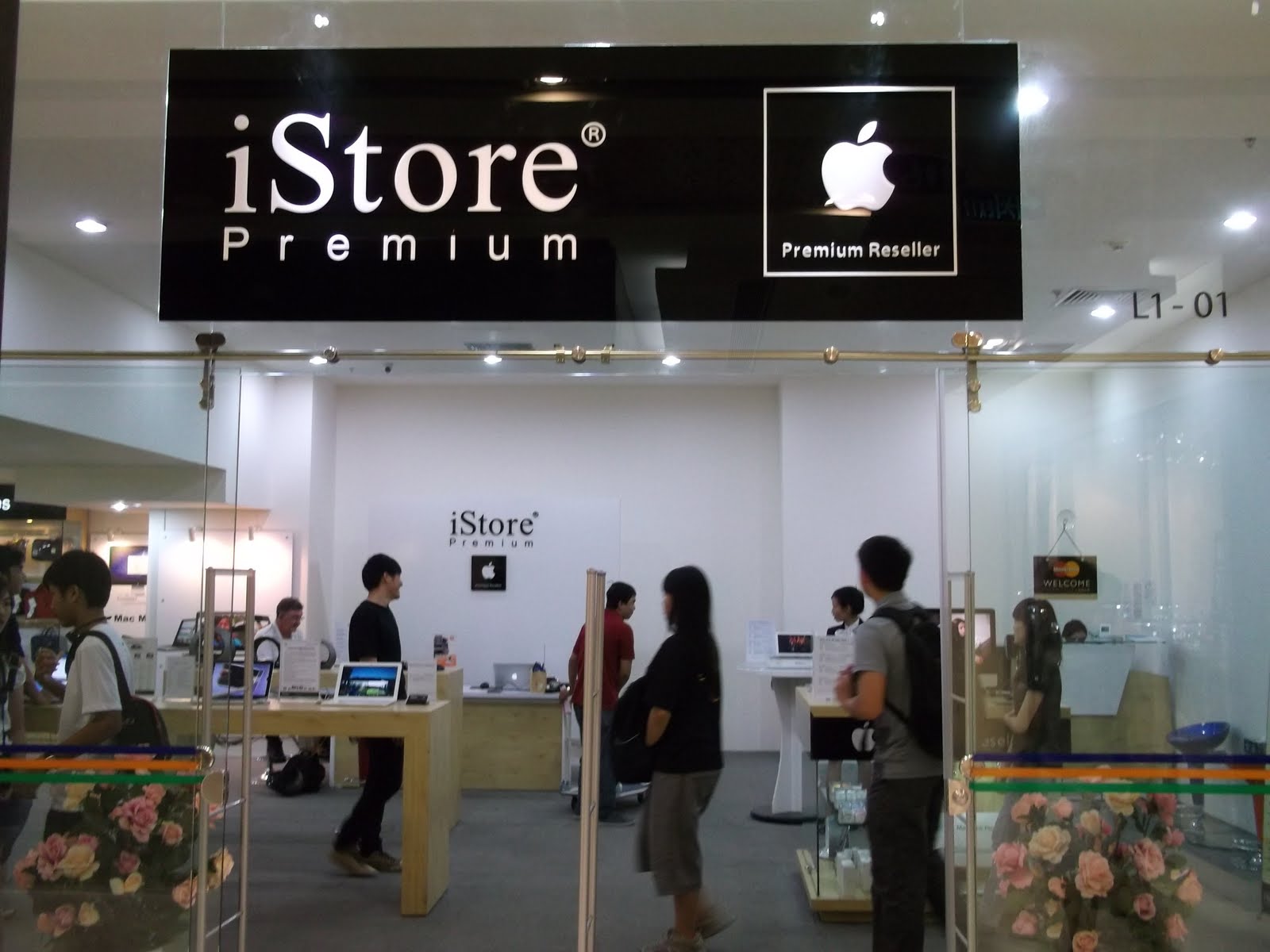


Apple Premium Reseller in Vietnam


A converse shop in Parksons


3 things I have learnt:

1. The retail in Vietnam is split into 2 major markets: Traditional and Modern. Traditional consists of wet markets, family run stalls and bazaar stalls while the Modern consists of supermarkets and hypermarkets, convenience chain stores, specialty chain stores (Sells 1 brand only) and online stores. As Vietnam is a developing country, we can bargain and have discounts easily because the goods are not at a fixed price.

2. There are 60.6 million consumers in Saigon. Most of them (27.9%) are usually at an age of 20-29 years old as they do not have enough money to fend for themselves and start selling products to gain a profit and earn a living. The consumers usually spend more save less, have high complicated product requirements, spend more on healthcare and appreciate more on the quality of the products.

3. The retail development in HCMC is developing, pavement in the market is very narrow, very crowded and the foods are exposed to the surroundings. The market is humid and most are imitations of the original authentic products. The manufactured products in Vietnam are usually exported out to other countries and those sold in Vietnam are overrated, stolen or defects. The products sold are cheaper but fake. The supermarkets have better quality and more expensive products than wet markets. However, the souvenirs are found more often in traditional markets than modern markets as they attract tourists.

Day 5 Reflections (May 26) — Benz Kew


VSIP logo (Singapore's partnership with Vietnam)


The urban planning of the future VSIP 2


The entrance of the sewage treatment plant


3 things I have learnt:

1. Vietnam is an ideal place for investors because the Vietnamese has the necessary skill sets and abilities, are more intelligent compared to other developing countries (e.g Cambodia, Laos). Ho Chi Minh City is also not an earthquake prone zone, so it will not affect the business industry because there are no disasters. The city has about 7 million people, and many of them do not have job opportunities. Because of this, many will get a job (e.g Teacher, Cleaner, etc) when the new urban area is developed.

2. VSIP 1 has a vast variety of factories--From Kimberly-Clarke to Yakult--. The surrounding area is much like Singapore, with wide pavements and roads. The road plants and trees are also very similar to Singapore plants. Many lamp posts and gates look just identical to Singapore. The buildings are also built horizontally than vertically because land is cheaper in Vietnam-unlike Singapore where limited land space costs very expensive and building vertically is very costly because of the mechanical systems and lifts. The higher the building gets, the more expensive to build the lifts.

3. VSIP 2 is the future urban area of Vietnam--There is a cultural center, river, university and residential which can hold up to 125,000 people. It is international, which gives foreign people to live there. This year during September, the university will house 1,000 students while it prepares for teachers and workers. The designs of this area are all made by Singapore companies-Surbana, NUS School of Design and Research. There is also a copycat made by Vietnam called VHIP (Viet Houng Industrial Park) where the "dirty" stuffs are manufactured here (e.g Textiles) and a new sewage treatment plant. The roads were halfway constructed to the dirt tracks. It is very small unlike Singapore's, and this industrial park will take many years to catch up. The VSIPs appears to be in-charged by the company Becamex.

Thursday, May 26, 2011

Day 4 Reflection (May 25) - Benz Kew


Boat near mangrove


Planting mangroves to protect the forests!


Crab near the hole on the mud near the mangrove plantation

3 things I have learnt:

1. I learnt that the forest protection is very important, especially Vietnam, where a huge amount of forests were destroyed by the Americans during the war spraying herbicides. The Can Gio biosphere is all man-made, which means that the trees and mangroves are all planted by humans for reforestation.

2. Due to the Vietnam war, it heavily affected the Can Gio biosphere ecosystem. Back then, Vietnam had a rich diversity of species of animals. Crocodiles were teeming in the rivers before the war. Now, they are not seen by humans and disappear. The government gives reward to people living near the forests to observe any illegal activities (e.g Cutting down trees, Polluting the river).

3. The locals living in the reserve use solar power and the energy is not sufficient enough to power the house and electrical appliances. The solar power is subsidised by the authorities. There will be a future house worth 185 million Vietnam Don. They need boat transport to the city to get food, supplies, petrol and send the children to school.

Tuesday, May 24, 2011

Day 3 Reflections (May 24) — Hao Yang, Benz, Hao En & Jurvis

Photo 1:
Air holes for breathing underground.

Photo 2:
Booby trap made out of bamboo.


Photo 3:
Temple sides has arches similar to the ones at the Islamic Mosque.


Photo 4:
The Cao Dai Temple, the architecture has a symmetry.

What have we learnt:

1 The fusion of the Eastern and Western cultures and religion in Cao Dai Temple can be seen through the arrangement of structures and the decorative. Examples of the arrangement of structures adapted from the West are the symmetrical arrangement of the 28 pillars, the balconies, the front structures and the tall figure (much like Notre Dame Cathedral), and the arches (Islamic Mosque). Examples of the decorative adapted from the West includes the ceiling painted with clouds and stars. Those adapted from the East includes the supernatural animals, as well as the colours used (yellow, blue, red). They believe that the Left Eye is closer to the heart which signifies the Yang, seeing everything that people do.

2 The complexity of the Cu Chi tunnels, booby traps and how the Liberation Army (Viet Cong) used guerrilla warfare to defeat the Americans. The traps were carved by bamboo sticks for spikes, they had air holes coming out of the ground to breathe and smoke vents. There was also an underground well where the Vietnamese soldiers could get clean water, as Americans polluted the water. The tunnels are unusually small; only the size of a Vietnamese back then could get through. The entrances, landmines and bunks are very well-covered with twigs and dead leaves, leaving the Americans extremely susceptible to the Vietnamese and have no knowledge in Guerrilla Warfare. This shows that the Vietnamese were very intelligent and had great team spirit and morale to get America's remnants of bomb shells and create their own weapons.

3 The Cao Dai Temple, although seems well-planned and intricate, has no master plans made before the building was constructed. It was constructed without architects or professionals, but rather local farmers. Hence it took 5 years to construct. After the building was done up, the government requested for its master planning, which then the people started to take measurements of the building and put it back into "planning stage". Our group observed that there were a lot of sand and the prayers wore a white costume.

Monday, May 23, 2011

Day 2 Reflections (May 23) — Hao Yang, Benz, Hao En & Jurvis

What we have learnt:


The government is only reducing the number of traffic jams via developing roads and infrastructure planning and registrations of vehicles (motorcycles).


Some of the buildings are influenced by the French, and they are called colonial buildings.
This can be seen through the symmetrical design, large open porch, arches and decorative features in the architecture. In addition, the France-lookalike traffic lights around the area also supports this.
District 2 is still in development. Its aim is to replace District 1 as an urbanized living area. The infrastructure and layout of District 2 is also more well-planned than District 1.